Safe & Unsafe Foods for Dachshunds: What Can Dachshunds Eat?
If you live with a dachshund, you already know one thing for certain: they are very interested in what you’re eating.
A doxie can be sound asleep across the room and somehow hear a cheese wrapper open. Suddenly, you have a little long-bodied shadow staring up at you as if they haven’t eaten in days.
It’s tempting to share, especially when those eyes are involved. But not every food that’s safe for us is safe for dogs—and even foods dachshunds can eat aren’t always a good choice in large amounts.
Because dachshunds are small dogs with long backs, maintaining a healthy weight is especially important. A few bites here and there can add up much faster than we realize.
So what can dachshunds eat? Let’s make it simple.
Important: This guide is for general educational purposes and is not a substitute for veterinary advice. If your dachshund has eaten something potentially toxic, is showing unusual symptoms, or has a medical condition requiring a special diet, contact your veterinarian or a pet poison-control service promptly.
Can Dachshunds Eat Human Food?
Yes—some human foods are perfectly safe for dachshunds in moderation.
Plain lean meats, certain fruits and vegetables, and a few other everyday foods can make great occasional treats. The important words here are plain and occasional.
Foods prepared for people often contain ingredients dogs don't need, including excess salt, butter, oils, sugar and seasonings. Some recipes also contain ingredients that can be dangerous to dogs, such as onion or garlic.
When sharing food with your dachshund, simpler is usually better.
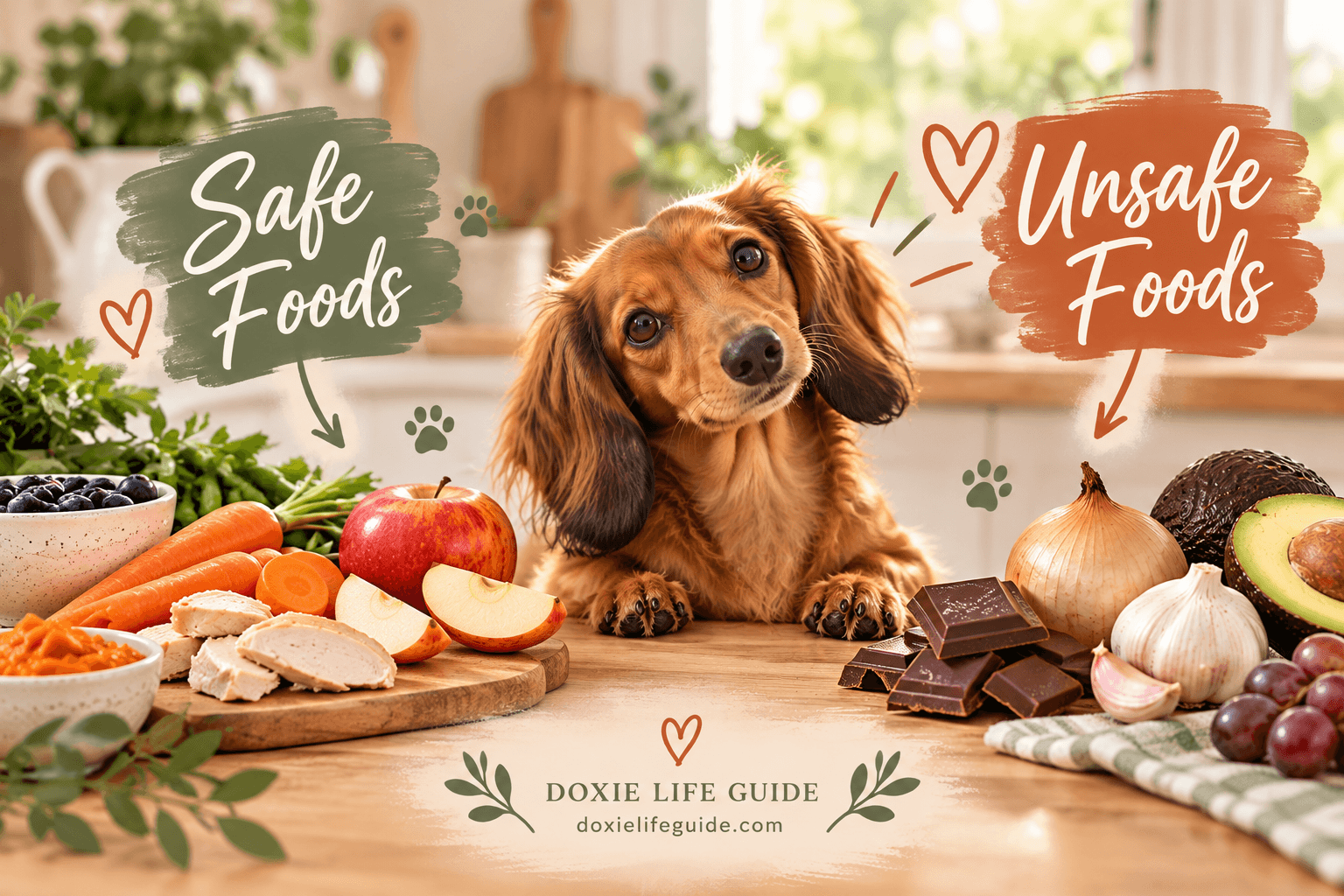
Safe Foods Dachshunds Can Eat
These foods are generally considered dog-safe when prepared appropriately and offered in reasonable portions.
Plain Cooked Chicken or Turkey
Plain, fully cooked chicken or turkey can be an excellent high-protein treat.
Remove the skin, bones and excess fat, and skip the seasoning. Never give your dachshund cooked poultry bones. Cooked bones can splinter and cause choking or serious injuries to the digestive tract.
A few small pieces of plain meat are plenty for a dachshund.
Lean Beef
Plain, thoroughly cooked lean beef is another option.
Avoid heavily seasoned hamburger, steak fat and meat cooked with onion or garlic. What makes a meal delicious for us can make it inappropriate for your dog.
Eggs
Dachshunds can eat fully cooked eggs.
Scrambled or boiled eggs can make an occasional protein-rich addition, but prepare them without butter, salt or seasoning.
Remember that an entire egg is a much bigger serving relative to a 10- or 15-pound dachshund than it is to a person.
Carrots
Carrots are an easy, crunchy treat that many dogs enjoy.
Serve them plain and cut them into appropriately sized pieces. Cooked carrots are also fine as long as they aren't covered in butter, sugar or seasoning.
Green Beans
Plain green beans can be a nice lower-calorie treat, especially for a dachshund who seems convinced that every trip into the kitchen should result in a snack.
Fresh, frozen or cooked green beans can work. If you're using canned green beans, choose a no-salt-added variety when possible.
Pumpkin
Plain pumpkin can be a useful food to have around.
The key word is plain. Canned 100% pumpkin is very different from pumpkin pie filling, which contains added sugar and spices.
If you're adding pumpkin to your dog's regular diet for digestive reasons, talk with your veterinarian about an appropriate amount.
Sweet Potato
Plain, cooked sweet potato can be offered in small amounts.
Remove the skin if necessary, cook it thoroughly and don't add butter, brown sugar, marshmallows or other toppings.
In other words, your dachshund can have sweet potato. They don't need Thanksgiving sweet potato casserole.
Blueberries
Blueberries make a convenient little treat for dachshunds because they're naturally small.
Fresh or frozen blueberries can both work, although frozen berries may be messy if your doxie decides the living-room rug is the perfect place to eat them.
Strawberries
Fresh strawberries are safe for most dogs in moderation.
Remove the stem and cut the fruit into small pieces. Strawberries contain natural sugar, so think of them as a treat rather than an unlimited snack.
Apples
Dachshunds can have small pieces of apple, but remove the core, stem and seeds first.
A couple of bite-sized pieces can provide a satisfying crunch without turning snack time into a second meal.
Bananas
Bananas are safe for dogs in small amounts, but they're relatively high in natural sugar.
A few small slices are enough for a dachshund. There is no need to hand over half your banana simply because someone is staring at you.
Watermelon
Plain, seedless watermelon can be a refreshing occasional treat.
Remove the rind and seeds before offering it. The soft fruit itself is the part your dog should eat.
Cucumber
Plain cucumber is another light, crunchy option.
Cut it into small pieces and serve it without dressing, dip or seasoning.
Plain Rice
Fully cooked plain white or brown rice is generally safe for dogs.
Rice is often included in bland diets, but if your dachshund is vomiting, has diarrhea or isn't feeling well, don't automatically treat the problem at home with rice. Your veterinarian can help determine what your dog actually needs.
Plain Greek Yogurt
Some dogs can tolerate small amounts of plain, unsweetened yogurt.
Choose yogurt without added sugar or artificial sweeteners, and remember that some dogs don't tolerate dairy particularly well. Start with a tiny amount if your dachshund hasn't had it before.
Foods Dachshunds Should Only Have Occasionally
There's a middle category that can be confusing: foods that aren't necessarily toxic but aren't particularly good everyday treats.
Cheese is a perfect example.
Most dachshunds would probably nominate cheese as its own food group. Small pieces may be okay for many dogs, but cheese can be high in fat and calories, and some dogs don't tolerate dairy well.
The same caution applies to foods like peanut butter.
Plain peanut butter can be an occasional treat, but it's calorie-dense. Always check the ingredient label and never give a dog a product containing xylitol, a sweetener that is toxic to dogs.
Other rich or fatty table foods may not technically appear on a “never eat” list, but that doesn't make them good choices.
For dachshunds, the question isn't only:
“Is this toxic?”
It's also:
“Is this helping my dog stay healthy?”
Foods Dachshunds Should NEVER Eat
Some foods aren't simply unhealthy—they can be dangerous or toxic to dogs.
Chocolate
Chocolate can be toxic to dogs. The risk depends on the type and amount consumed as well as the dog's size, with darker chocolate generally posing greater concern.
If your dachshund eats chocolate, don't wait for symptoms before deciding whether it was enough to matter. Contact your veterinarian or a pet poison-control service for guidance.
Grapes and Raisins
Do not give grapes or raisins to your dachshund.
They can cause serious kidney injury in dogs, and there isn't a reliably predictable safe amount.
That includes foods containing raisins, such as breads, trail mixes, cookies and baked goods.
Onions, Garlic, Chives and Leeks
Members of the allium family can be harmful to dogs.
This is one reason seasoned human food can be tricky. Onion and garlic aren't always obvious—you'll find them in sauces, soups, gravies, seasoning blends and prepared foods.
Xylitol
Xylitol is an especially important ingredient for dog owners to recognize.
This sweetener may be found in certain sugar-free gums, candies, baked goods, oral-care products and other products. In dogs, xylitol can cause a dangerous drop in blood sugar and may cause liver injury.
If you suspect your dachshund has eaten something containing xylitol, treat it as urgent and contact a veterinarian or pet poison-control service immediately.
Alcohol
Dogs should not consume alcohol.
Remember that alcohol exposure isn't limited to a glass of beer or wine. Alcohol can also be present in foods and unbaked yeast dough.
Macadamia Nuts
Macadamia nuts are toxic to dogs and should be kept out of reach.
Be especially careful with cookies and mixed nuts where macadamias may not be the first ingredient you notice.
Raw Yeast Dough
Unbaked dough containing yeast can expand inside the stomach and can also produce alcohol as it ferments.
Keep rising bread and pizza dough safely away from curious dachshunds.
Cooked Bones
Cooked bones aren't a toxin, but they can still be dangerous.
They can splinter, become lodged or injure the mouth or gastrointestinal tract. Don't give your dachshund leftover chicken, turkey, pork or other cooked bones.
Caffeine
Coffee, coffee grounds, tea, energy drinks and other concentrated sources of caffeine should be kept away from dogs.
And yes, that includes the cup sitting on the low coffee table that's conveniently located at dachshund height.
What About Avocado?
Avocado gets put on many “toxic foods” graphics without much explanation.
The flesh itself is not considered the biggest avocado-related concern for dogs, but the pit presents a choking or obstruction hazard, and the leaves, skin and pit contain higher concentrations of persin. Avocado is also relatively high in fat.
For DLG purposes, I'd put avocado in the “not worth sharing” category. There are plenty of easier, safer treats.
What About Peanut Butter?
Yes, many dachshunds can have a little peanut butter.
But check the label first.
Choose a simple peanut butter without xylitol and use a small amount. Peanut butter packs a lot of calories into a tiny spoonful—which matters when the dog eating it weighs 12 pounds.
It's useful for hiding medication, filling a toy or giving an occasional treat. It doesn't need to become a daily side dish.
Why Portion Size Matters So Much for Dachshunds
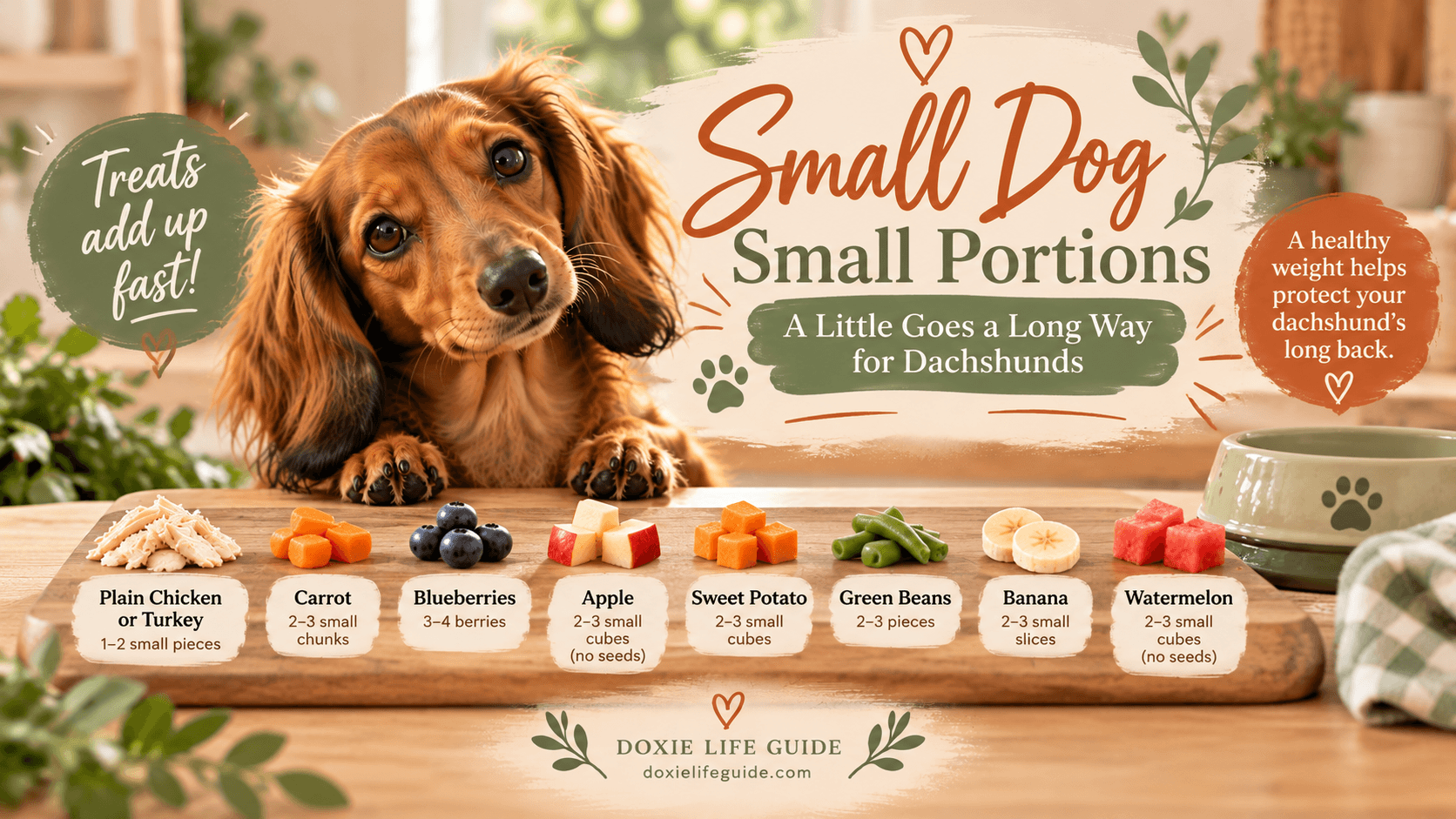
This is one of the most important parts of the conversation.
A “little bite” to us can be a significant amount of food to a dachshund.
Treats, table scraps and extras all count toward your dog's daily calories. If those extras become routine, weight can creep up even when the amount of regular dog food hasn't changed.
And with dachshunds, keeping excess weight off isn't just about appearance.
Their distinctive long-backed body shape already places special demands on the spine. Maintaining a healthy body condition is one practical thing we can control.
Related: Dachshund Back Care: Everyday Ways to Help Protect Their Spine
As a general rule, treats should make up only a small portion of your dog's overall diet. Your dachshund's primary food should provide complete and balanced nutrition appropriate for their age and individual needs.
A Better Way to Share Your Food
You don't have to stop sharing little treats with your dachshund.
Just make the sharing intentional.
Instead of giving pieces from your finished dinner, set aside a tiny bit of plain chicken before seasoning it. Offer a blueberry while you're making breakfast. Save a couple of plain green beans before adding butter to the family's serving.
Your dachshund still gets the excitement of:
“I GOT SOME!”
You get much more control over what actually went into their mouth.
Be Careful With “Healthy” Foods Too
One mistake that's easy to make is assuming that because something is nutritious for people, more must be better for dogs.
Not necessarily.
Fruit still contains sugar. Peanut butter still contains a lot of calories. Cheese can be high in fat. Too much of a new food can upset your dog's stomach even when the food itself is considered safe.
Introduce unfamiliar foods in very small quantities, especially if your dachshund has a sensitive stomach.
If your dog has diabetes, pancreatitis, food allergies, kidney disease or another medical condition, their safe-food list may also be different. Ask your veterinarian before adding new foods or treats.
What Should You Do If Your Dachshund Eats Something Unsafe?
First, figure out what they ate, approximately how much, and when they ate it.
Keep the package or ingredient list if you have it.
Then contact your veterinarian, an emergency veterinary hospital, or a reputable animal poison-control service for guidance.
Don't induce vomiting or give home remedies unless a veterinary professional specifically instructs you to do so. The appropriate response depends on what was eaten and your dog's individual situation.
And don't assume that your dachshund is fine simply because they're acting normal right now. Some toxic exposures don't cause immediate symptoms.
Quick Dachshund Food Guide
Here's the simple version worth remembering:
Usually safe in small, plain portions: lean cooked chicken or turkey, lean beef, fully cooked eggs, carrots, green beans, plain pumpkin, cooked sweet potato, blueberries, strawberries, seedless apple pieces, banana, seedless watermelon, cucumber and plain rice.
Use sparingly: cheese, peanut butter, yogurt and other calorie-dense or richer foods.
Keep away from your dachshund: chocolate, grapes, raisins, onion, garlic, chives, leeks, xylitol, alcohol, macadamia nuts, raw yeast dough, caffeine and cooked bones.
And when you're unsure about something?
Look it up before you share it.
Those dachshund eyes are extremely persuasive. They are not, unfortunately, a reliable source of nutritional advice.
The Bottom Line
Dachshunds can enjoy plenty of fresh, simple foods alongside their regular diet—but they don't need to eat everything we eat.
Choose plain foods, keep portions small, avoid known hazards and remember that treats are extras rather than the foundation of your dog's nutrition.
Sharing a blueberry or tiny piece of chicken can be one of those fun little moments you have with your doxie.
Just don't let them convince you they need half your dinner.
They will try.