Why Are Dachshunds So Stubborn? How to Train a Dachshund Who Has a Mind of Their Own
If you share your life with a dachshund, you've probably had this moment:
You give a command. Your dachshund looks directly at you. You know they heard you. They know you know they heard you.
And then…they make a different decision. 😂
Dachshunds have earned a reputation for being stubborn, independent and occasionally convinced that household rules are merely suggestions. But there’s more behind that behavior than a little dog with a big attitude.
Understanding why dachshunds behave the way they do can make training easier—and a whole lot less frustrating.
Dachshunds Weren't Bred to Wait for Instructions
To understand your dachshund, it helps to remember what these little dogs were originally bred to do.
Dachshunds were developed as hunting dogs. Their long bodies and short legs allowed them to pursue burrowing animals underground, where they often had to work independently from their humans.
Think about what that required: courage, persistence, problem-solving and the confidence to make decisions without waiting for someone to tell them what to do.
Those traits were incredibly useful in a working dog.
In your living room?
They can look a lot like stubbornness.
Your dachshund isn't necessarily trying to challenge you. Sometimes they're simply doing what generations of dachshunds were bred to do:
Assess the situation and make their own decision.
Unfortunately, their decision may be that coming inside from the yard is significantly less appealing than investigating one more smell.
Are Dachshunds Actually Hard to Train?
Dachshunds are intelligent dogs and absolutely can be trained.
If you’re just getting started with a new puppy, our What You Actually Need for a New Dachshund Puppy guide can help you get the basics in place before training begins.
The challenge is that being smart and being eager to obey are not the same thing.
A dachshund may learn exactly what "come" means and still decide that whatever they're doing is more interesting.
That's why training a dachshund often works best when you stop thinking:
How do I make my dog do this?
and start thinking:
How do I make doing this worthwhile for my dog?
That small shift can make a big difference.
1. Figure Out What Motivates Your Dachshund
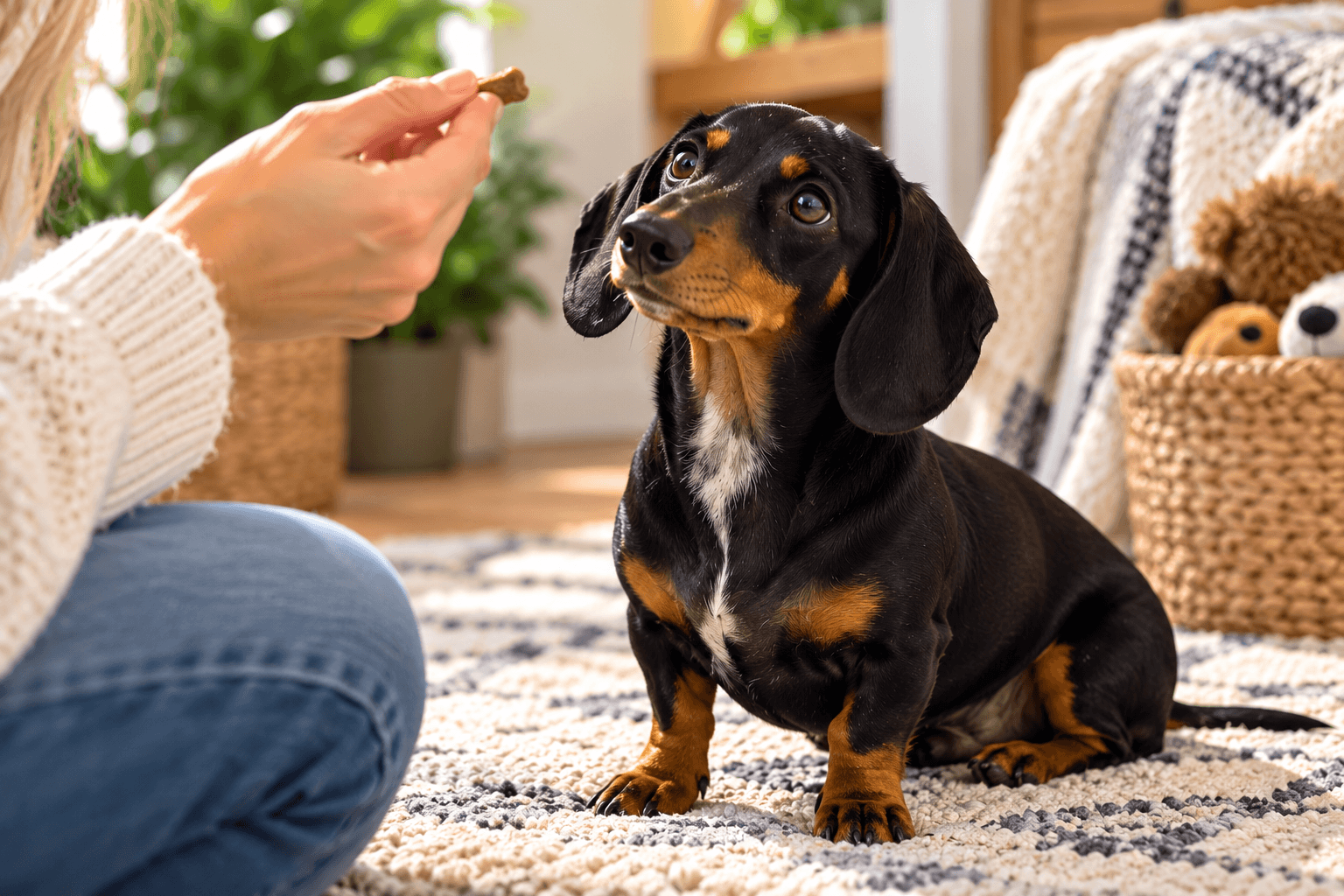
For many dachshunds, food is extremely persuasive.
Small, high-value treats can be useful when teaching new behaviors. Keep the pieces tiny—you want lots of opportunities to reward without accidentally turning a training session into dinner.
But food isn't the only reward.
Depending on your dog, motivation might also be:
enthusiastic praise
a favorite toy
a quick game
getting to sniff something interesting
going outside
attention from you
Pay attention to what your particular dachshund values.
Once you know their currency, training gets easier.
2. Keep Training Sessions Short
You don't need a 30-minute formal training session.
For many dachshunds, several short sessions throughout the day are much more productive.
Practice "sit" while you're waiting for coffee to brew.
Practice "wait" before opening the door.
Practice recall from across the living room.
Ask for a simple behavior before putting down dinner.
Training woven into everyday life tends to feel less like homework—for both of you.
3. Reward the Behavior You Want to See Again
Timing matters.
When your dachshund does what you asked, reward them quickly enough that they can connect the behavior with the reward.
This also applies outside formal training.
If your dog quietly settles beside you instead of barking at everything passing the window, that's worth noticing.
If they come when called—even when you didn't specifically plan a training session—reward it.
We naturally notice dogs when they're doing something annoying.
Sometimes the fastest way to improve behavior is to become equally good at noticing when they're doing something right.
4. Don't Turn Training Into a Battle of Wills
Trying to "out-stubborn" a dachshund is rarely a productive strategy.
Harsh punishment can create fear or frustration without actually teaching your dog what you want them to do instead.
If something isn't working, change the situation.
Make the task easier. Reduce distractions. Use a better reward. Break the behavior into smaller steps.
And sometimes?
End the session and try again later.
Training should build communication between you and your dog—not become a contest over who gives in first.
5. Be Consistent—Even When That Face Appears
This may be harder for the human than the dachshund.
If jumping on someone is allowed sometimes but discouraged other times, your dog has to figure out which version of the rule applies today.
If begging from the table works once every ten dinners, your dachshund has learned something very important:
Persistence eventually pays.
And if there is one thing dachshunds tend to have plenty of, it's persistence.
Decide what your household rules are and try to make them as consistent as possible.
6. Work With Their Natural Instincts
Instead of constantly fighting dachshund instincts, give those instincts appropriate outlets.
Dachshunds often enjoy activities that let them sniff, search, investigate and problem-solve.
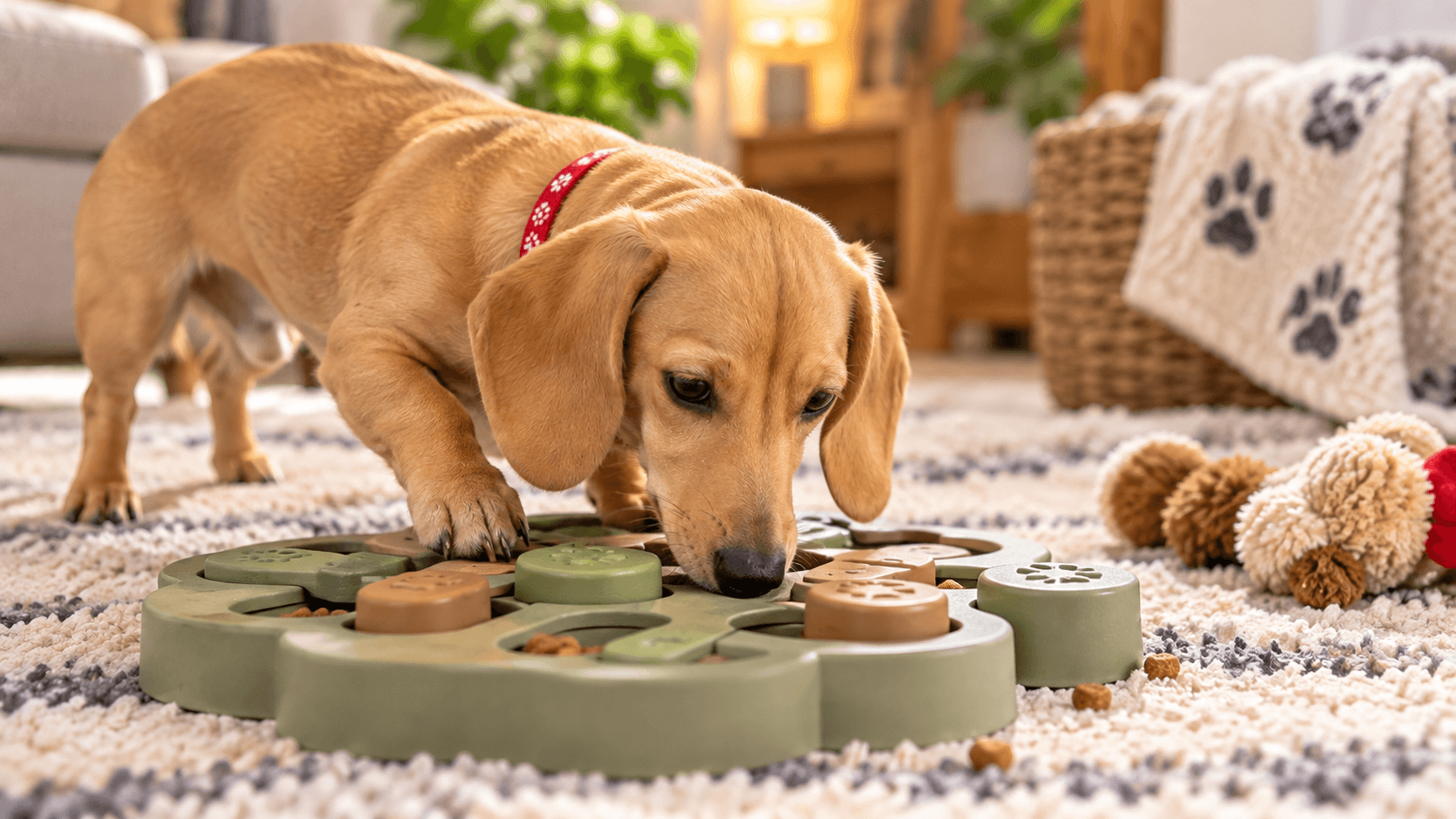
Try hiding a few treats around a room and letting your dog find them. Use puzzle toys or food-dispensing toys. Practice simple scent games. Teach tricks. Rotate toys instead of leaving everything available all the time.
Even a slow "sniff walk," where your dog gets time to investigate the world rather than simply covering distance, can provide valuable mental enrichment.
A dachshund who has something constructive to do with that busy little brain may be less inclined to invent a project of their own.
And dachshund-created projects are not always projects you would have approved. 😂
7. Don't Forget Mental Exercise
Physical exercise matters, but dachshunds need opportunities to think, too.
A dog can come home from a walk physically tired and still be mentally restless.
Training itself is enrichment. So are scent games, puzzles, hide-and-seek, learning the names of toys and practicing new tricks.
You don't need an elaborate enrichment schedule.
Five intentional minutes here and there can add up.
8. Choose Your Battles
Not every dachshund quirk needs fixing.
There are behaviors that matter for safety and everyday life—recall, waiting at doors, walking safely on a leash, handling, house training and being able to settle.
Some training also protects your dachshund physically. Teaching them to use a ramp consistently is one of those skills. If that’s something you’re working on, see How to Train Your Dachshund to Use a Ramp for our step-by-step approach.
And if you’re wondering why we make such a fuss about ramps in the first place, our Dachshund Back Care: Everyday Ways to Help Protect Their Spine guide explains the everyday habits that can help reduce unnecessary strain on a dachshund's back.
And then there are personality quirks.
Your dachshund rearranging every blanket into precisely the configuration they prefer?
Probably not an emergency. 😂
Good training isn't about eliminating everything that makes your dachshund a dachshund.
It's about creating enough communication and boundaries that you can live safely and happily together.
What About Barking?
Ah, yes.
The dachshund security system.
Dachshunds can be very alert to sounds and movement around their homes, and barking can quickly become a habit if every noise triggers a response.
Rather than simply yelling "quiet" from across the room—which may sound suspiciously like you're joining the barking—work on teaching an alternative behavior.
For example, call your dog away from the window and reward them for coming to you. Teach them to go to a bed or mat. Reward quiet moments.
You may never turn a dachshund into a dog who is completely unconcerned that a UPS truck has entered the county.
But you can work toward a dog who alerts you and then learns to settle again.
What About Recall?
Recall deserves extra attention with dachshunds because their noses can be extremely compelling.
Start somewhere easy, such as inside your house.
Call your dachshund enthusiastically and reward generously when they reach you. Gradually practice around more distractions.
One particularly important rule:
Don't repeatedly call your dog when you know they're unlikely to respond.
Otherwise, "come" can slowly become background noise.
And when your dachshund does come—even if it took longer than you wanted—avoid punishing them once they reach you.
You want arriving at your side to predict good things.
For safety, use a leash or secure fenced area when practicing outdoors rather than relying on an unproven recall.
The Dachshund Training Mistake We Humans Make
Sometimes we expect dogs to understand far more than we've actually taught them.
We say "no."
But no…what?
Don't jump?
Don't bark?
Don't steal the sock?
Don't stand there contemplating your next crime? 😂
Whenever possible, teach your dachshund what you want them to do instead.
Rather than only "don't jump," teach "sit."
Instead of only "stop barking," teach "come here" or "go to your bed."
Instead of chasing them around the house for the stolen sock—which may turn theft into an excellent game—teach "drop it" and trade for something better.
Clear instructions are much easier for a dog to understand than constantly being told what not to do.
Your Dachshund Isn't Broken. They're a Dachshund.
The independence that can make dachshunds challenging to train is also part of what makes people fall completely in love with them.
They're clever.
They're determined.
They're curious.
They're funny.
And somehow, a dog weighing 12 pounds can have enough personality to run an entire household.
Successful dachshund training isn't about winning a battle against that personality.
It's about understanding the dog in front of you, finding what motivates them, setting consistent expectations and making good behavior worth repeating.
Will your dachshund still occasionally look directly at you and make a completely different choice?
Probably.
We did say dachshund. ❤️