How to Train a Dachshund to Use a Ramp (Even If They’d Rather Jump)
This post may contain affiliate links. If you purchase through one of these links, Doxie Life Guide may earn a small commission at no additional cost to you. I only recommend products I believe may be useful to dachshund owners.
You bought the ramp. You set it up perfectly. You showed it to your dachshund.
And your doxie took one look at it…and jumped off the couch anyway.
Sound familiar?
Dachshunds can be wonderfully determined little dogs, and convincing them to use a ramp instead of launching themselves off the furniture may take a little patience. The good news is that most dachshunds can learn to use a ramp confidently — especially when you make the experience positive and introduce it gradually.
Here’s how to get started.
Why Teach Your Dachshund to Use a Ramp?
Dachshunds have a long back and short legs, which makes their spine one of the areas owners need to be particularly mindful of throughout their lives.
Because of their body structure, dachshunds are predisposed to intervertebral disc disease (IVDD). While no ramp can guarantee that a dachshund will never develop a back problem, reducing unnecessary jumping is one practical way to limit some of the repeated impact placed on their bodies.
A ramp can be particularly useful for:
Getting on and off the couch
Getting on and off the bed
Entering and exiting a vehicle
Navigating other significant height changes around the home
But there’s one catch: the ramp only helps if your dachshund actually uses it.
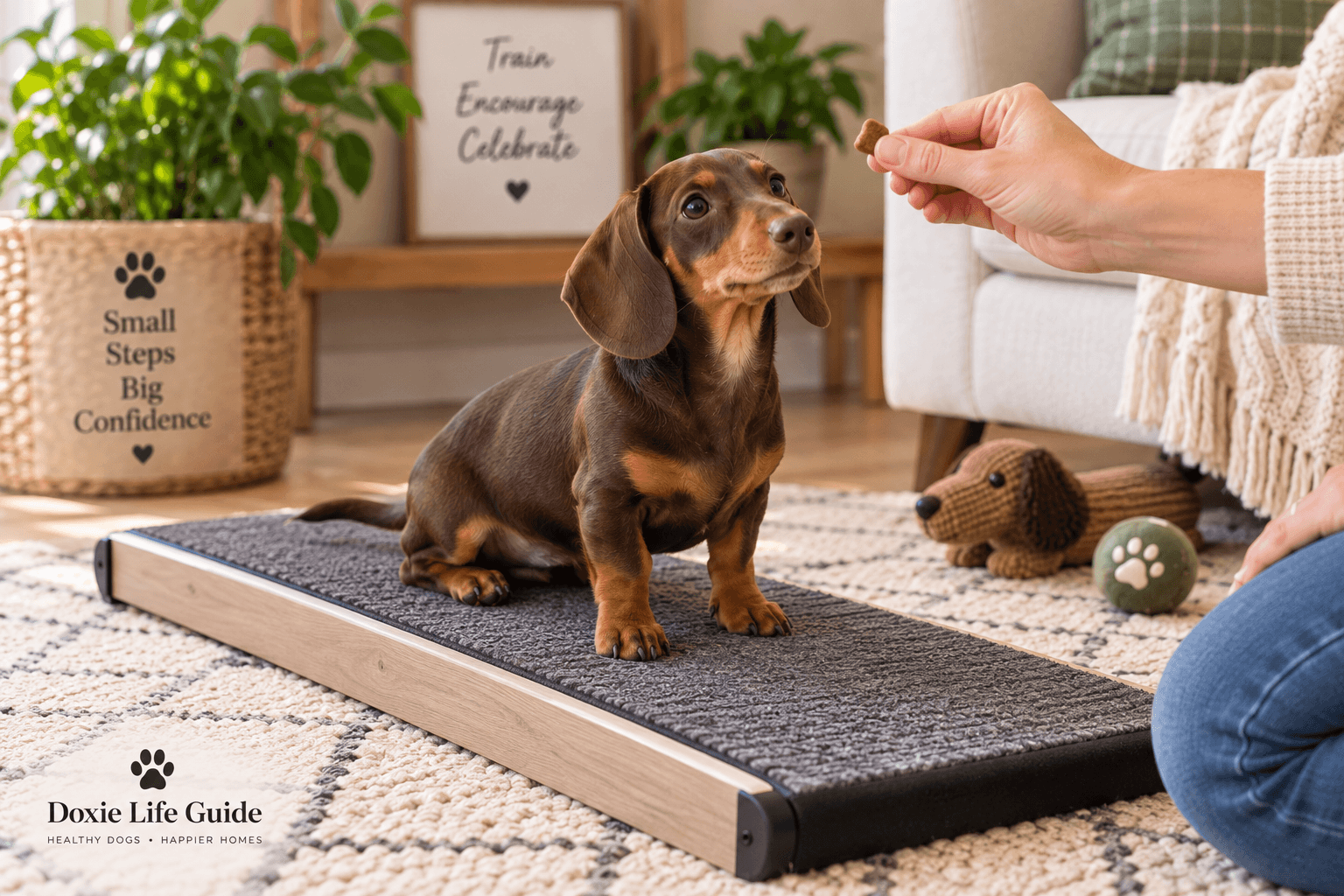
Start With the Ramp Flat on the Floor
One of the easiest mistakes to make is setting up a new ramp at its full incline and expecting your dachshund to understand what to do.
Instead, start with the ramp completely flat on the floor.
Let your dachshund investigate it without pressure. Put a few small treats along the ramp and allow your dog to walk across it voluntarily.
Praise your dog when they put their paws on the ramp or walk across it.
At this stage, you aren’t really teaching them to climb anything. You’re simply teaching:
Ramp = safe place where good things happen.
For a cautious dachshund, this step might take several short training sessions — and that’s perfectly fine.
Use Really Good Treats
This probably isn’t the time for the boring everyday kibble.
Use tiny pieces of something your dachshund really loves. The treats should be small enough that you can give several during a training session without turning ramp practice into an extra meal.
Place treats at gradually increasing distances along the ramp.
You can also stand at the opposite end and encourage your dachshund toward you.
Keep your voice upbeat and relaxed. You want your dog to think this is a fun little game — not a test they can fail.
Gradually Increase the Incline
Once your dachshund happily walks across the ramp while it’s flat, begin raising it slightly.
The key word here is slightly.
Let your dog practice at a very gentle incline until they’re comfortable. Then increase it again.
Eventually, you can work up to the height where you’ll actually be using the ramp.
This gradual approach is especially helpful for dogs that are nervous about unstable surfaces or don’t like the feeling of walking uphill.
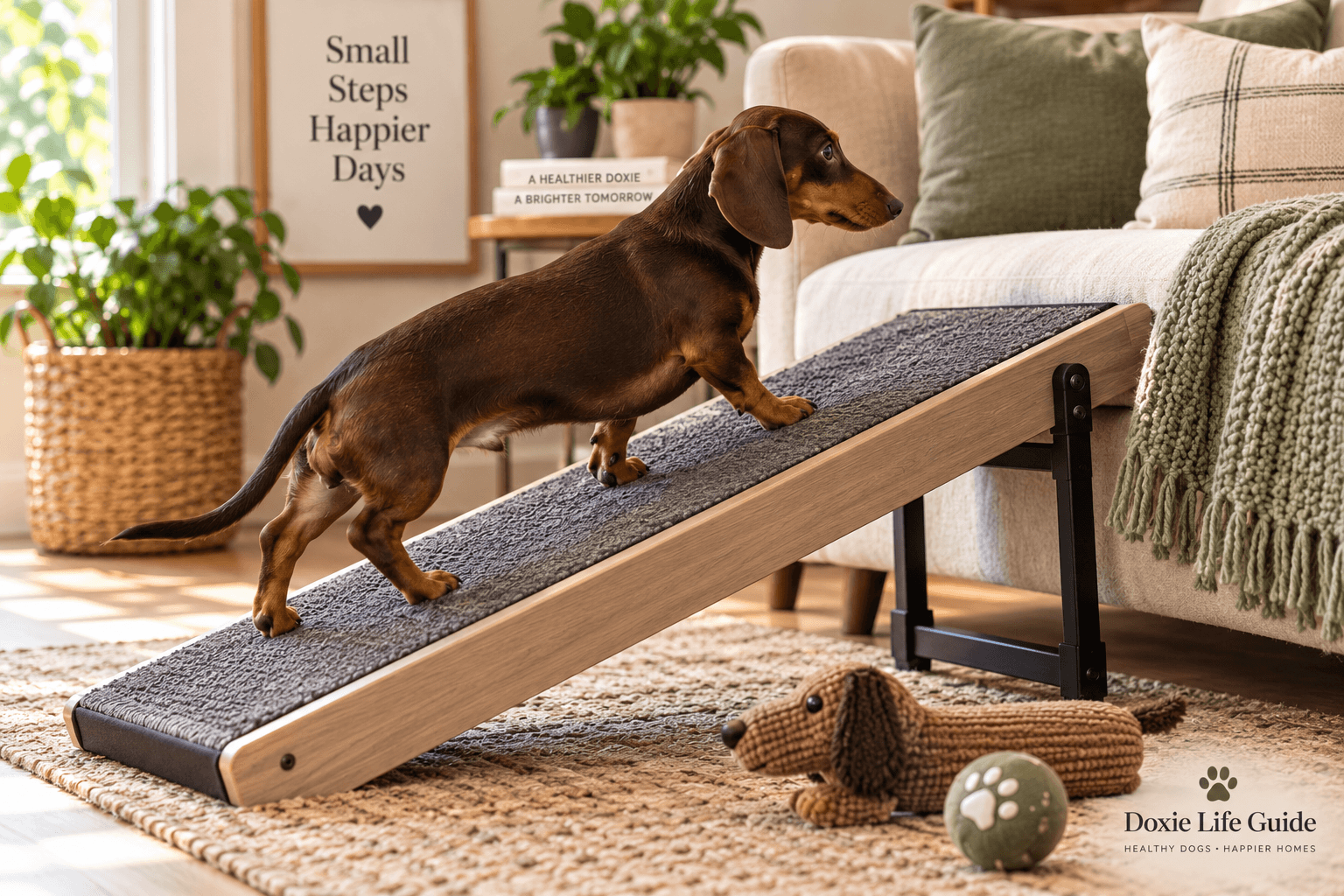
Make Sure the Ramp Feels Secure
Imagine stepping onto a bridge and feeling it wobble underneath you.
You probably wouldn’t be eager to cross it again.
Your dachshund may feel the same way about a ramp that moves, flexes, slides or feels slippery under their paws.
Before training, check that the ramp:
Doesn’t slide when your dog steps onto it
Has enough traction for their paws
Doesn’t wobble excessively
Is securely positioned against the furniture or vehicle
Isn’t unnecessarily steep
If your dachshund starts confidently and suddenly refuses to use the ramp, take another look at the setup. One scary slip can make a cautious dog much more hesitant the next time.
Practice Going Up AND Down
Going up a ramp and going down a ramp are two different skills.
Some dachshunds happily trot up a ramp and then stand at the top looking at you as if to say, You don’t seriously expect me to go back down that thing.
Practice both directions separately.
When going downhill, you may need to slow things down even more. Use treats to encourage controlled steps rather than allowing your dog to rush down the ramp.
Confidence is more important than speed.
Add a Cue
Once your dachshund understands what the ramp is for, add a simple verbal cue such as:
“Ramp.”
Say the cue as your dog approaches the ramp, then reward them after they use it.
Eventually, the word itself can become a reminder that you’d like them to take the ramp instead of jumping.
Try to use the same word consistently so everyone in the household is giving the dog the same message.
Block the Tempting Shortcut
This can be surprisingly important.
If the ramp is next to the couch but your dachshund can easily leap off the opposite side, many doxies will choose the shortcut they’ve been using their entire lives.
Whenever possible, arrange the ramp so that it becomes the easiest and most obvious route.
For example, you may be able to use furniture placement, pillows or another safe barrier to discourage jumping from the side of a couch or bed.
You’re not trying to trap your dog. You’re simply making the good choice the easy choice.
Keep Training Sessions Short
Dachshunds are smart.
They’re also dachshunds.
If your training session turns into a battle of wills, you’re probably not going to win — and neither of you will have much fun.
Five minutes of successful practice is much better than twenty minutes of frustration.
Try several short sessions throughout the day and finish while your dog is still doing well.
What If Your Dachshund Refuses to Use the Ramp?
Don’t force them onto it.
Dragging or pushing a frightened dog onto a ramp can make the fear worse.
Instead, go backward in your training.
If they’re afraid of the incline, lower it.
If they’re afraid of the ramp itself, put it flat on the floor again.
If they’re reluctant to step onto the surface, reward them for simply putting their front paws on it.
Break the task into tiny steps and reward progress.
You may also want to look at the ramp itself. A ramp that is too steep, narrow, slippery or unstable may be genuinely uncomfortable for your dog to use.
Puppies May Be Easier to Teach — But Older Dachshunds Can Learn Too
If you have a dachshund puppy, ramp training is a great habit to introduce early.
Instead of waiting until your dog is older to suddenly announce that jumping off the couch is no longer allowed, you can make the ramp part of normal life from the beginning.
But don’t give up on an adult or senior dachshund.
Older dogs can absolutely learn to use ramps. They may simply need more time, especially if they’ve spent years jumping wherever they want to go.
For senior dogs or dachshunds with existing mobility or back problems, talk with your veterinarian about what’s appropriate for your individual dog.
Consistency Is What Makes the Ramp Work
Teaching your dachshund to walk across a ramp isn’t usually the hardest part.
Teaching them that they’re supposed to choose the ramp every time can be.
Try to be consistent. If jumping is discouraged one day but allowed the next, your dachshund has little reason to change an old habit.
Reward ramp use even after your dog has learned the skill. An occasional treat or enthusiastic “good dog!” helps reinforce that they’re still making the choice you want.
And if your dachshund occasionally forgets and launches themselves off the couch anyway?
Welcome to life with a dachshund.
Just redirect them back to the ramp and keep practicing.
Need Help Choosing a Ramp?
Not all dog ramps work equally well for a dachshund’s short legs and long body. The incline, traction, stability and height all matter.
If you’re still looking for the right one, check out our Best Ramps for Dachshunds: What to Look For Before You Buy guide for the features we think matter most when choosing a ramp for a doxie.
Affiliate Disclosure
This post may contain affiliate links. If you purchase through one of these links, Doxie Life Guide may earn a small commission at no additional cost to you. I only recommend products I believe may be useful to dachshund owners.
Important Note
This article is for general educational purposes and isn’t a substitute for professional veterinary advice. If your dachshund has back pain, mobility problems, IVDD, or is recovering from an injury or surgery, consult your veterinarian before changing their activity or mobility setup.