How to Potty Train a Dachshund: What Actually Works With This Stubborn Little Breed
Dachshunds are smart, funny, affectionate little dogs with enormous personalities packed into very short bodies.
They are also somewhat famous for looking you directly in the eye and deciding that your suggestion is merely one option.
Potty training can bring that independent streak out in full force.
If you're wondering why your dachshund puppy seems to understand perfectly well that they're supposed to potty outside—and then pees on the rug 20 minutes later—you are definitely not the first dachshund owner to have that thought.
The good news? Dachshunds can absolutely be reliably house trained. The trick is understanding that consistency, supervision, routine, and really good rewards usually work better than simply waiting for them to “get it.”
Here’s how to make potty training easier for both of you.
Why Are Dachshunds So Hard to Potty Train?
Dachshunds aren't incapable of learning where to potty. Far from it.
They were bred to be independent hunting dogs capable of making decisions without waiting for a human to tell them what to do. That confidence and independence is part of what makes the breed so much fun—but it can also make training interesting. If you've ever wondered why dachshunds can be so stubborn, understanding what they were originally bred to do explains a lot about how they learn.
Then add a few very dachshund-specific complications.
They're low to the ground, so cold grass, wet grass and snow can be particularly unappealing. Some dachshunds would also strongly prefer not to interrupt a warm nap just because their bladder says they should.
And puppies simply don't have the bladder control of adult dogs.
The solution isn't to become stricter. It's to make the right behavior easy, predictable and rewarding until it becomes a habit.
1. Start With a Potty Schedule
For a young dachshund puppy, don't wait for them to tell you they need to go outside.
Take them.
Your puppy should get frequent potty opportunities, especially:
First thing in the morning
After eating or drinking
After waking from a nap
After an energetic play session
Before going into the crate
Immediately after coming out of the crate
Before bedtime
Very young puppies may need additional trips between these times.
Rather than focusing on an exact number of minutes that every puppy should supposedly be able to “hold it,” pay attention to your puppy's individual pattern.
If accidents consistently happen after an hour and a half, don't wait two hours to take them outside.
Go sooner.
As your dachshund becomes successful, you can gradually increase the time between potty breaks.
2. Use the Same Potty Spot
Especially during the early stages of training, take your dachshund to approximately the same area outside.
This helps make the purpose of the trip obvious.
This isn't outside playtime.
This isn't a tour of every interesting smell in the yard.
We're here on business.
Keep things relatively boring until your puppy goes. You can introduce a simple cue such as “go potty”, but say it calmly rather than repeating it twenty times.
Once they finish, that's when the good stuff happens.
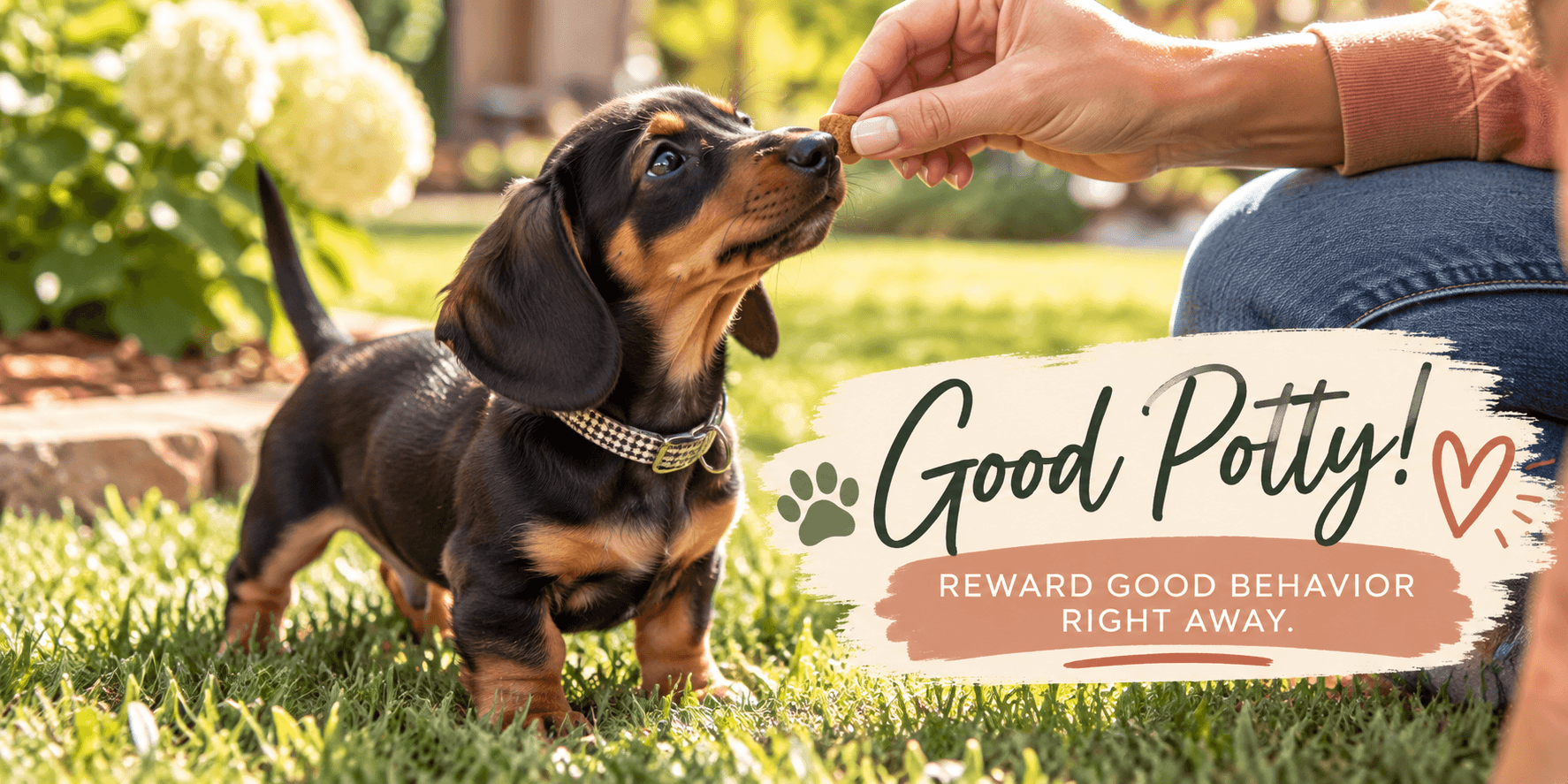
3. Reward Immediately—And Make It Worth Their While
Timing matters.
Don't wait until you get back into the house to give your puppy a treat. By then, your dachshund may associate the reward with coming through the door rather than going potty outside.
Reward them right after they finish outside.
Use a small, high-value treat and plenty of happy praise.
You want your puppy thinking:
Outside potty = excellent decision.
Dachshunds tend to respond well when there's something in the deal for them. Use that to your advantage.
As the behavior becomes reliable, you won't need to throw a celebration every time your adult dachshund pees outside. But during training, make success worth repeating.
4. Supervision Is Your Secret Weapon
One of the biggest potty-training mistakes is giving a puppy too much freedom too soon.
If your puppy can quietly wander into another room, they have plenty of opportunity to practice the exact behavior you're trying to stop.
During active potty training, keep your puppy where you can see them.
Watch for signs such as:
Suddenly wandering away
Sniffing the floor intently
Circling
Heading toward a familiar accident spot
Becoming restless
Stopping play and looking for somewhere to go
When you see those signs, don't wait to find out whether you're right.
Take them outside.
Baby gates, exercise pens and closed doors can make supervision much easier while your puppy is learning.
More freedom comes after they've earned it.
5. Use the Crate as a Training Tool, Not a Punishment
A properly introduced crate can be extremely helpful during house training.
Most dogs naturally prefer not to soil the area where they sleep, so an appropriately sized crate can help your puppy learn to wait for the next potty opportunity.
The key phrase there is appropriately sized.
Your dachshund should have enough room to stand, turn around and lie comfortably. A huge crate may allow a puppy to sleep at one end and use the other as a bathroom.
For a growing puppy, a crate with a divider can be helpful.
And remember: a crate doesn't magically give a puppy adult bladder control. Young puppies still need frequent bathroom breaks.
The crate should be a safe resting place—not somewhere your dachshund spends excessive stretches because potty training is inconvenient. If you want more advice on what supplies, like a crate, you need for your new puppy, our blog What You Actually Need for a New Dachshund Puppy provides great guidance.
6. What If Your Dachshund Doesn't Go Outside?
This is where a lot of potty-training plans fall apart.
You take your puppy outside.
They sniff.
They stare at a leaf.
They investigate something invisible in the grass.
They do everything except potty.
Eventually you give up, bring them inside and—
They pee on the floor.
Instead, if you're reasonably sure your puppy needs to go but they don't, bring them inside while keeping them closely supervised or briefly confined, then try again shortly afterward.
Don't give them 30 minutes of unsupervised living-room freedom.
They haven't finished the assignment yet.
7. Rain, Snow and Cold Weather: The Dachshund Potty Training Challenge
If you own a dachshund, eventually you may encounter this situation:
You open the door.
Your dachshund looks outside.
It's raining.
They look back at you.
Absolutely not.
Because of their short legs and low bodies, unpleasant weather can be especially uncomfortable for dachshunds. But if every rainy day becomes permission to potty indoors, you've accidentally created a second set of rules.
Try making bad-weather potty trips quick and predictable.
A covered potty area can help if you have one available. Some dachshunds also tolerate cold or wet conditions better with an appropriately fitting coat.
But the basic rule stays the same:
We still potty outside.
You don't need a mile-long walk. Give them an opportunity to do their business, reward them when they do, and then head back into the warm house.
That's a pretty fair deal.
8. Don't Punish Accidents
Finding an accident after it happens is frustrating, but punishment won't teach your dachshund what you actually wanted them to do.
They aren't going to connect your anger now with something they did several minutes earlier.
If you catch your puppy beginning to potty indoors, calmly interrupt them and take them outside.
If you discover it later, simply clean it up.
Then ask yourself a more useful question:
How did they get the opportunity to have that accident?
Did too much time pass between potty breaks?
Were they unsupervised?
Did you miss their signal?
That information helps you adjust the routine.
Potty training works much better when accidents are treated as information rather than a battle of wills.
9. Clean Accidents Thoroughly
A spot that smells like a bathroom to your dachshund can quickly become one.
And your dog's nose is far more sensitive than yours.
Use a pet-safe enzymatic cleaner designed to break down urine residue rather than simply covering the odor with fragrance.
This is particularly important on carpet, rugs and upholstered surfaces where urine can soak beneath the surface.
If your puppy repeatedly returns to one particular area, restrict access while you're working on training and make sure it has been thoroughly cleaned.
10. Keep Everyone in the House Consistent
Dachshunds are very good at noticing loopholes.
If one person requires the puppy to potty before playtime while another person brings them inside after two minutes because it's cold, your puppy is getting mixed messages.
Try to keep the household routine consistent:
Same potty area.
Same cue.
Same expectations.
Same immediate reward.
The clearer the rules are, the easier they are for your puppy to learn.
How Long Does It Take to Potty Train a Dachshund?
There isn't one universal timeline.
Age, previous training, routine, environment and the individual dog all matter.
More importantly, potty training isn't necessarily finished because your puppy went a week without an accident.
Think of reliability as something you build gradually.
A puppy who succeeds while closely supervised may not yet be ready for unrestricted access to the entire house.
Expand their freedom slowly.
If accidents suddenly increase, reduce the freedom again and return to the routine that was working.
That's not failure.
It's simply more information about what your puppy is ready for.
What If My Dachshund Was Potty Trained and Suddenly Starts Having Accidents?
That's different from a puppy who's still learning.
If a previously house-trained dachshund suddenly begins urinating or defecating indoors, don't automatically assume they're being stubborn.
Changes in bathroom habits can sometimes be associated with medical problems, aging, medications, stress or changes in routine.
A sudden or unexplained change—particularly frequent urination, straining, blood in the urine, excessive thirst, diarrhea or other symptoms—is worth discussing with your veterinarian.
Training can't fix a medical problem.
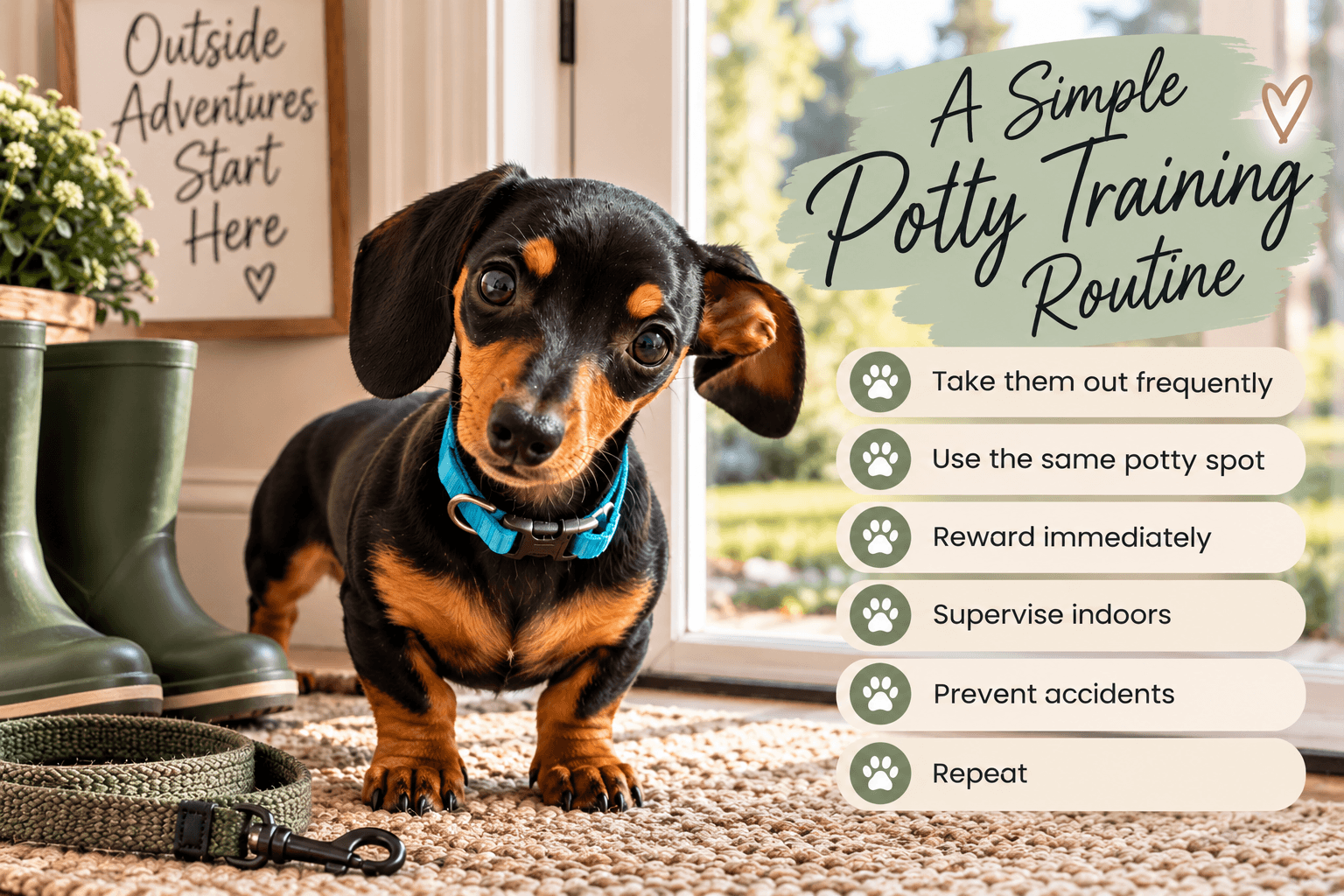
A Simple Dachshund Potty Training Routine
If all of this feels like a lot, remember that the actual plan is pretty simple:
Take them out frequently → use the same area → reward immediately → supervise indoors → prevent accidents → repeat.
That's it.
The magic isn't a special potty-training trick.
It's doing those boring little things consistently enough that your dachshund eventually decides:
Fine. Apparently this is how we do things around here.
And with a dachshund, that counts as cooperation.
Potty Training a Dachshund Takes Patience—But It Gets Better
Dachshunds have a reputation for being difficult to house train, but “difficult” doesn't mean impossible.
They're intelligent dogs. They're also independent, persistent and occasionally very committed to their own opinions.
That's part of why we love them.
Keep your routine predictable, make outdoor potty trips rewarding, limit freedom until your puppy is ready for it, and don't let occasional setbacks convince you that training isn't working.
Those tiny successes add up.
Eventually you'll realize you haven't cleaned up an accident in weeks—and somewhere along the way, your stubborn little dachshund actually learned the rules.
They may even let you believe it was your idea.