Dachshund Dental Care: A Simple Guide to Healthier Teeth & Gums
Those little dachshund smiles are pretty hard to resist—but keeping those teeth healthy takes a little more than admiring them.
Dental care is an important part of your dachshund’s overall health, and it’s easy to overlook until bad breath, visible tartar or irritated gums start showing up. Like other dogs, dachshunds can develop plaque and tartar that may eventually lead to periodontal disease if it isn’t addressed.
The good news? A simple dental routine at home can go a long way toward keeping your doxie’s mouth healthier. And no, that doesn’t necessarily mean wrestling your dachshund with a toothbrush every night for the rest of your life.
Brushing is still the best foundation, but dental chews, powders, water additives, sprays and other products can also have a place in a well-rounded routine.
Why Dental Care Matters
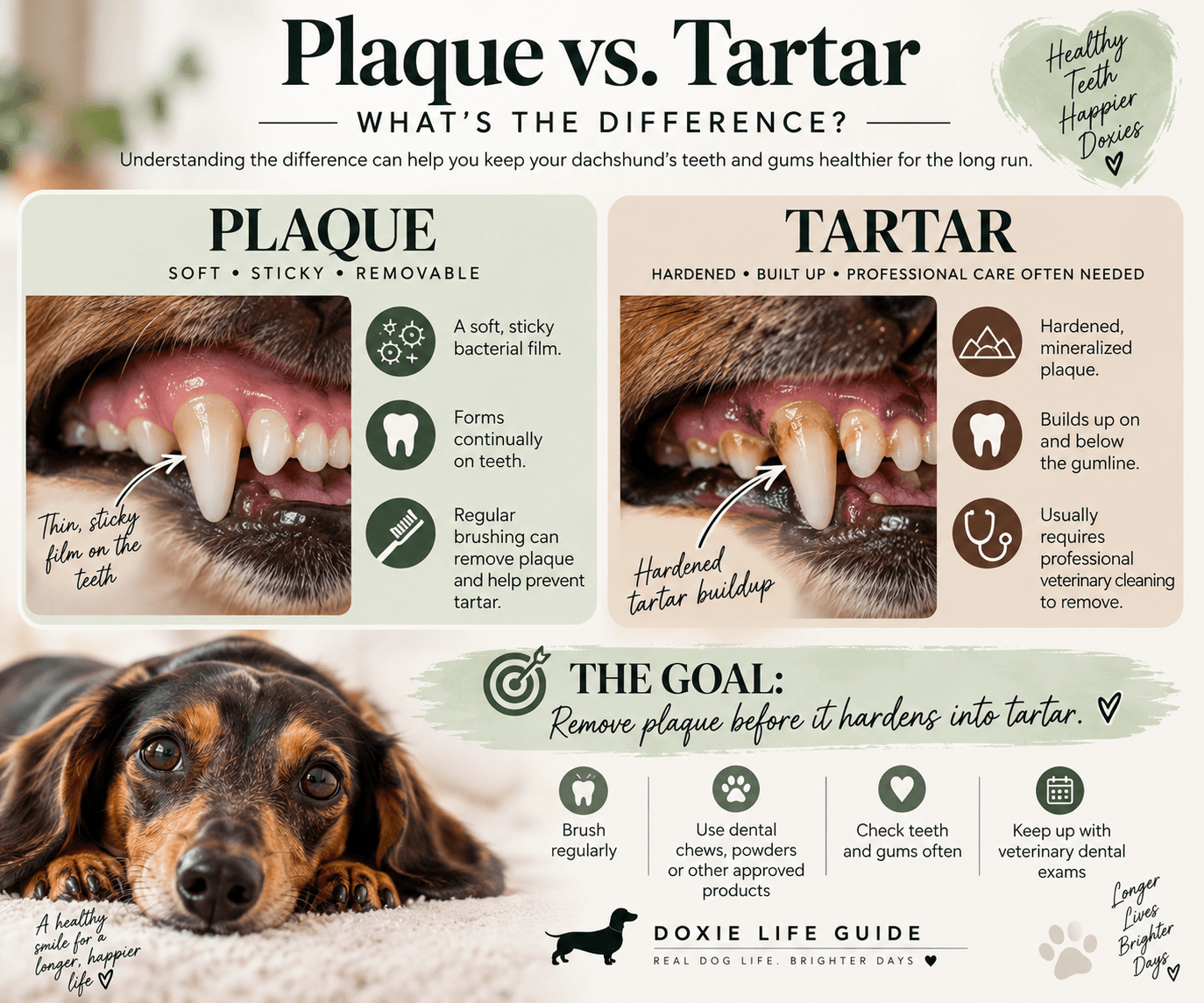
Plaque is a soft bacterial film that continually forms on the teeth. If it isn’t removed, it can harden into tartar (also called calculus), which can build up along and underneath the gumline.
Over time, that buildup can contribute to inflamed gums and periodontal disease.
One important distinction is that brushing can remove plaque, but it doesn't remove tartar that has already hardened onto the teeth. Once significant tartar is present, your veterinarian may recommend a professional dental cleaning.
That makes prevention especially worthwhile. Rather than waiting until your dachshund’s teeth need major attention, the goal is to establish a manageable routine that helps slow plaque and tartar accumulation in the first place.
Start With Brushing
If your dachshund will tolerate it, regular tooth brushing is one of the most effective things you can do at home.
Veterinary dental guidelines recommend daily brushing for the greatest benefit.
Use a soft toothbrush designed for pets—or another appropriately soft brush—and toothpaste formulated specifically for dogs. Human toothpaste isn’t intended to be swallowed by dogs and shouldn’t be used.
If your doxie has never had their teeth brushed before, don't expect perfection on day one.
Start slowly. Let your dog investigate the toothbrush and taste a small amount of dog toothpaste. Gradually work toward touching the teeth and gums, then brushing a few teeth at a time. Keep sessions short and positive.
And if your dachshund gives you the deeply offended I cannot believe you would do this to me look, you’re probably not the first doxie owner to receive it.
Consistency matters more than turning the first attempt into a battle.
If your dog's gums are already red, inflamed or painful, talk with your veterinarian before beginning a brushing routine. Brushing painful gums can make a dog understandably resistant to having their mouth handled.
What About Dental Chews?
Dental chews can be a convenient addition to your dachshund’s routine—especially for dogs who enjoy chewing.
But simply having the word “dental” on the package doesn't mean every chew has been shown to control plaque or tartar.
One helpful thing to look for is the Veterinary Oral Health Council (VOHC) Seal of Acceptance. VOHC reviews data from product trials and awards its seal to products that meet its standards for helping control plaque and/or tartar. Its current accepted-products list includes a variety of dental chews as well as other oral-care products.
For a dachshund, also pay attention to the recommended size and weight range on the package. Supervise chewing, and remember that edible dental chews contribute calories to your dog's daily intake.
Think of a dental chew as one tool in the toolbox, rather than a replacement for every other form of dental care.
Dental Powders and Food Additives
Dental powders have become increasingly popular because they're incredibly easy to incorporate into a routine: measure the appropriate amount and add it to your dog's food according to the product directions.
Some products in this category do have evidence behind them. For example, the current VOHC list includes powders that have earned acceptance for plaque and tartar control.
That doesn't mean every dental powder on the market works equally well, though.
When comparing products, look beyond advertising claims. Check whether the product has independent evidence supporting its claims, whether it has earned VOHC acceptance, how it is intended to work and whether there are any ingredients that aren't appropriate for your individual dog.
Powders can be particularly appealing for owners whose dachshunds aren't enthusiastic members of the toothbrush fan club.
Water Additives, Sprays and Gels
There are also products designed to be added to drinking water or applied directly inside a dog's mouth.
These can be another supplemental option, and some water additives, oral gels and sprays have earned VOHC acceptance for plaque and/or tartar control.
They're certainly convenient, but convenience shouldn't be confused with a magic solution.
Whenever you're considering one of these products, look for evidence supporting the specific product rather than assuming all dental sprays or water additives provide the same benefit.
And if a water additive changes the taste enough that your dachshund starts drinking less, discontinue it and make sure fresh, plain water is readily available. Hydration takes priority.
Are Dental Toys Enough?
Chewing can provide enrichment and may offer some mechanical cleaning, but a chew toy shouldn't be your dachshund's entire dental-care plan.
It's also worth being cautious about extremely hard chews and toys. Products that are harder than the tooth itself can potentially contribute to broken or damaged teeth. Veterinary dental guidance specifically cautions owners about inappropriate chew toys.
When in doubt about a particular chew or toy, ask your veterinarian whether it's appropriate for your dog.
A Simple Dachshund Dental Routine
Dental care doesn't need to involve six different products lined up on your kitchen counter.
A realistic routine might look something like this:
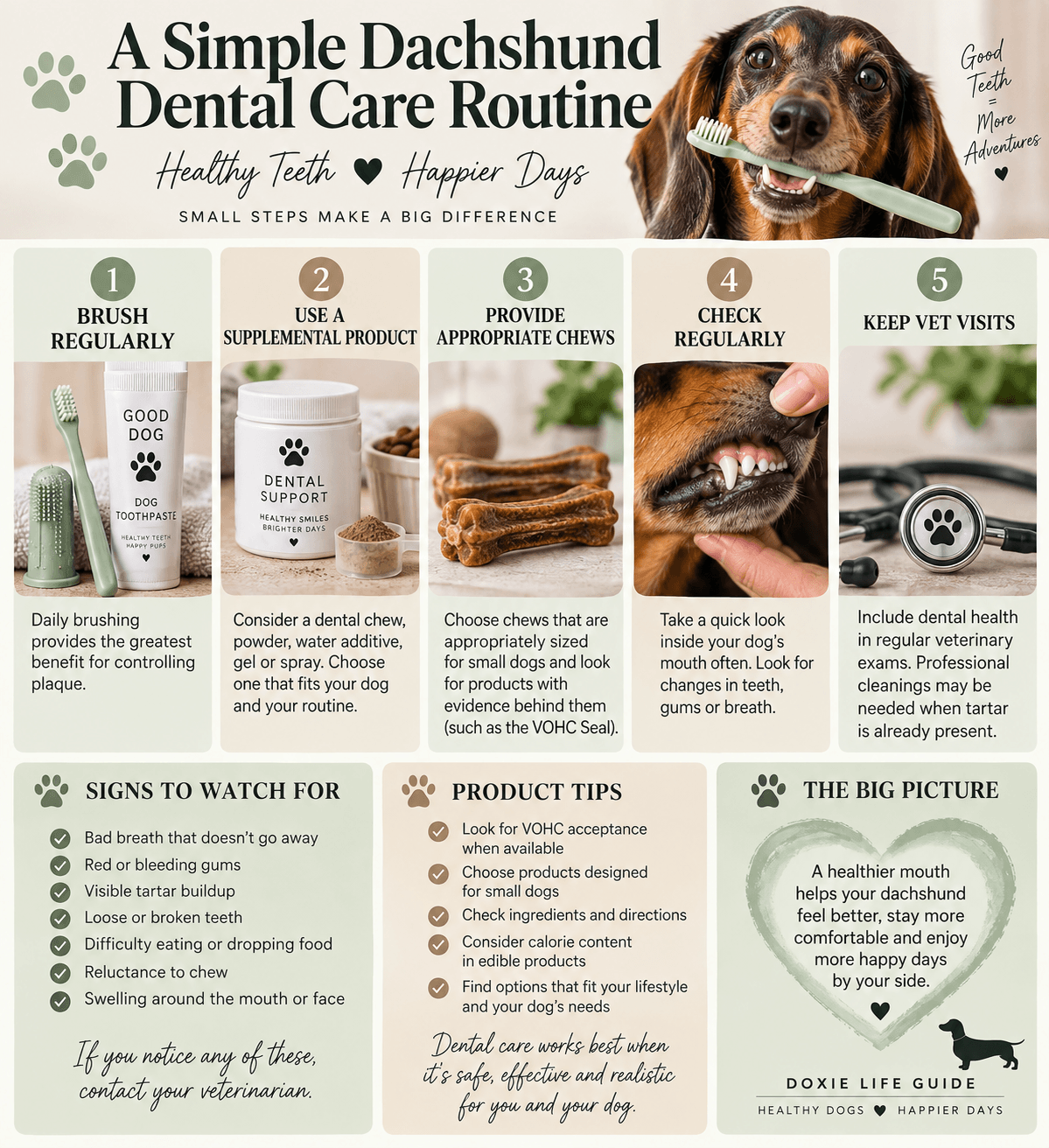
Brush regularly whenever possible. Daily brushing provides the greatest benefit for controlling plaque.
Choose one helpful supplemental product. Depending on your dog and lifestyle, that might be a dental chew, powder, water additive, gel or spray.
Look for evidence. The VOHC Seal is an easy way to identify products that have met established standards for plaque and/or tartar control.
Take a quick look inside your dachshund's mouth regularly. You don't need to conduct a veterinary exam—just become familiar with what your dog's teeth and gums normally look like.
Include dental health in regular veterinary visits. Home dental care is important, but it doesn't replace professional oral examinations and treatment when needed.
The best routine is ultimately one that is safe, effective and realistic enough that you'll actually stick with it.
When It's Time to Call the Vet
Home care is primarily about prevention and maintenance. It isn't a substitute for veterinary care when dental disease is already present.
Contact your veterinarian if you notice changes such as significant tartar buildup, red or bleeding gums, loose or broken teeth, swelling around the mouth or face, difficulty eating, dropping food, obvious mouth pain or a sudden change in your dog's breath.
And don't try to scrape hardened tartar off your dachshund's teeth yourself. Dental disease can extend below the gumline where you can't see it, and proper veterinary dental evaluation and treatment may be needed.
What We Look for in Dachshund Dental Products
There are a lot of dog dental products out there—and eventually we'll take a closer look at some of our favorites.
For now, a few things are worth considering when you're shopping:
Evidence that the product actually helps control plaque or tartar, including VOHC acceptance when available
Appropriate sizing for a small dog
Clear ingredients and directions
Ease of incorporating it into your normal routine
Calories in edible dental products
Your individual dog's health, dietary needs and chewing habits
You can browse the current VOHC Accepted Products for Dogs if you'd like to see which dental chews, powders, water additives, toothpastes and other products have earned its Seal of Acceptance.
Small Habit, Big Payoff
Your dachshund doesn't need an elaborate dental routine to get started.
A toothbrush, a few minutes of your time and perhaps one carefully chosen supplemental product can make dental care part of normal life rather than something you only think about when there's a problem.
Start small, find a routine that works for both of you and keep at it.
Because taking care of that long little body includes taking care of the teeth at the front of it, too. 🐾
Affiliate Disclosure
This post may contain affiliate links. If you purchase through one of these links, Doxie Life Guide may earn a small commission at no additional cost to you. I only recommend products I believe may be useful to dachshund owners.
Important Note
This article is for general educational purposes and is not a substitute for veterinary advice. Your veterinarian can recommend an oral-care routine based on your dachshund's individual dental and health needs.