What every dachshund owner should know about intervertebral disc disease, from early warning signs to helping your doxie live a comfortable, happy life.
There's something irresistible about a dachshund's long body, short little legs, and larger-than-life personality. But that adorable shape comes with a health concern every dachshund parent should understand: intervertebral disc disease (IVDD).
Hearing the words IVDD from your veterinarian can be frightening. You may suddenly have questions about pain, paralysis, surgery, crate rest, and whether your beloved doxie will ever run and play again.
The good news? Many dachshunds recover from IVDD and return to enjoying life. The outcome depends on the severity of the injury, how quickly appropriate treatment begins, and the individual dog's response to care.
Whether you're learning about IVDD for the first time or navigating a diagnosis, this guide will help you understand the condition, recognize warning signs, explore treatment options, and prepare for recovery.
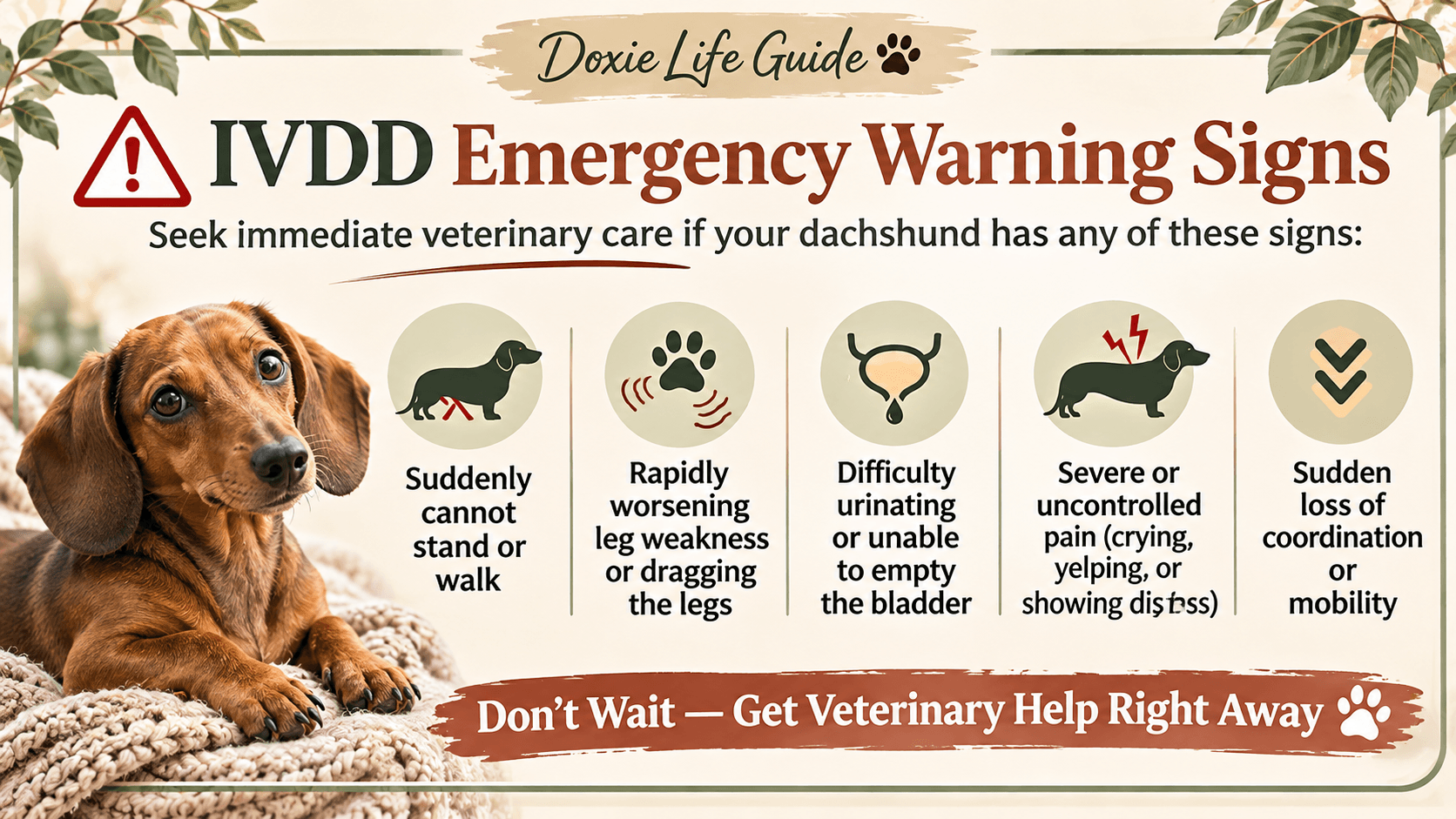
First, a quick safety check: If your dachshund is suddenly struggling to walk, showing severe pain, or having trouble urinating, seek immediate veterinary care. These symptoms should never wait.
What Is IVDD in Dachshunds?
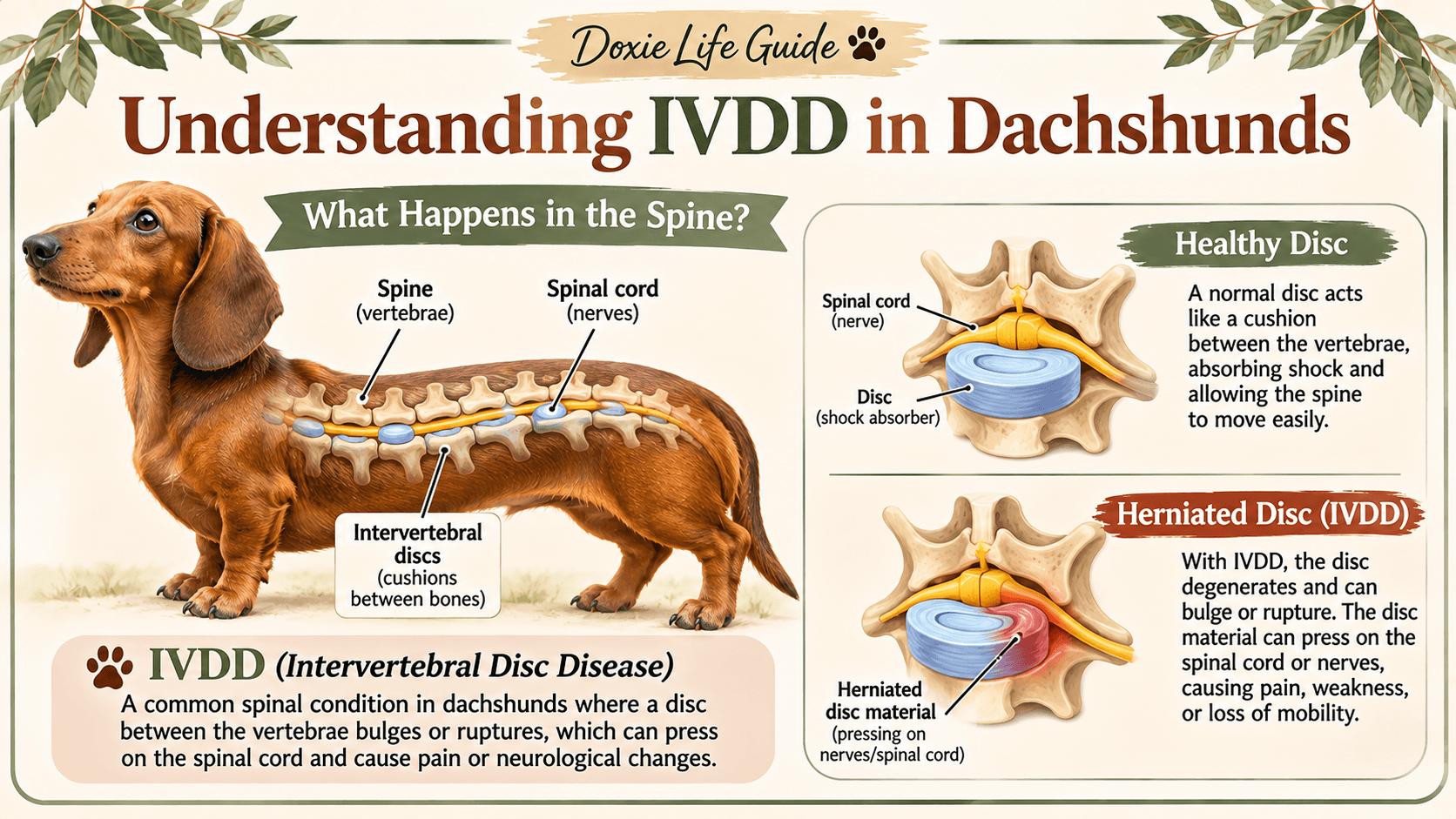
Intervertebral disc disease is a condition affecting the cushioning discs between the bones of the spine.
These discs normally act as shock absorbers, allowing the back to bend and move comfortably. Each disc has a tougher outer layer surrounding a softer center.
With IVDD, the disc degenerates and may bulge or rupture. When disc material presses against the spinal cord or nearby nerves, it can cause pain, weakness, difficulty walking, or even paralysis.
Why Are Dachshunds More Susceptible?
Dachshunds are a chondrodystrophic breed, meaning their characteristic short-legged body shape is associated with changes in cartilage development.
Their genetics also make them particularly susceptible to early degeneration of the spinal discs.
Although IVDD can affect many breeds, dachshunds are among those at increased risk.
Important: IVDD is not simply caused by a dachshund having a long back or jumping off furniture. Genetics play a major role, and even carefully protected dogs can develop the condition.
What Are the Early Warning Signs of IVDD?
One of the most important things a dachshund owner can do is recognize when something isn't right.
IVDD symptoms can appear suddenly or develop more gradually.
Early signs to watch for
Reluctance to jump, climb stairs, or move normally
Crying, yelping, or showing discomfort when picked up
A hunched back or unusually stiff posture
Shivering or trembling that may indicate pain
Hesitation to lower the head or turn the neck
Unusual quietness, restlessness, or withdrawal
Weakness, stumbling, or unsteady walking
Scuffing or dragging the paws
Sometimes the first clue is simply that your normally energetic dachshund doesn't want to move.
Don't dismiss sudden behavior changes as stubbornness or aging. Pain can be one of the earliest signs of a spinal problem.
When Is IVDD an Emergency?
Seek immediate veterinary care if your dachshund:
Suddenly cannot stand or walk
Develops rapidly worsening leg weakness
Begins dragging one or more legs
Cannot urinate normally or appears unable to empty the bladder
Experiences severe or uncontrollable pain
These symptoms can indicate significant spinal cord or nerve involvement.
If you suspect IVDD, restrict your dog's movement and contact a veterinarian immediately. Avoid stairs, jumping, stretching, massage, or attempting exercises before veterinary assessment. Keep the spine supported when transporting your dog.
Loss of mobility is not something to monitor at home while waiting to see whether it improves.
How Do Veterinarians Diagnose IVDD?
Your veterinarian will begin by examining your dachshund and assessing neurological function.
This may include checking:
Walking ability and coordination
Reflexes and paw positioning
Muscle strength
Pain responses
Bladder function
Areas of spinal discomfort
These findings help determine the severity of the problem and whether emergency treatment is necessary.
X-rays, MRI, and CT Scans
Standard X-rays may help identify certain spinal changes or rule out other conditions, but they cannot reliably confirm spinal cord compression caused by a disc herniation.
More advanced imaging may be recommended.
MRI (magnetic resonance imaging) provides detailed images of the spinal cord, discs, and surrounding tissues.
CT (computed tomography) can also identify many disc extrusions, particularly when the disc material is mineralized.
Your veterinarian or veterinary neurologist will recommend imaging based on your dog's symptoms, the suspected injury, and available treatment options.
Understanding the Different Levels of IVDD Severity
Not every IVDD diagnosis looks the same.
Some dachshunds experience back pain but continue walking normally. Others develop weakness, lose the ability to walk, or experience severe neurological impairment.
Veterinary professionals commonly assess IVDD using the dog's ability to walk, move the legs voluntarily, and perceive deep pain.
General presentationWhat owners may noticePain without obvious weaknessStiffness, trembling, reluctance to moveWeakness but still walkingWobbling, stumbling, dragging toesUnable to walk independentlyLeg movement may remain, but the dog cannot support itselfParalysis with deep pain sensationNo voluntary walking, but deep pain perception remainsParalysis without deep pain sensationSevere neurological injury requiring urgent specialist assessment
Deep pain perception must be evaluated by a veterinary professional. It cannot be reliably assessed by watching whether a dog pulls its foot away.
The degree of neurological impairment is one of the most important factors influencing treatment recommendations and prognosis.
How Is IVDD Treated in Dachshunds?
There are two primary treatment approaches: conservative medical management and surgery.
The best choice depends on the severity of the injury, neurological examination, imaging findings, pain control, and your veterinarian's recommendations.
1. Conservative Treatment: Medication and Restricted Activity
Some dachshunds with milder IVDD symptoms can recover without surgery.
Conservative management commonly involves:
Carefully restricted movement
Veterinarian-prescribed pain medication
Anti-inflammatory treatment when appropriate
Monitoring neurological function
Follow-up veterinary examinations
Rehabilitation when recommended
Activity restriction is a major part of conservative treatment.
Your veterinarian may prescribe several weeks of confinement in a crate or small recovery enclosure, with carefully controlled trips outside for bathroom needs.
Even if your dachshund seems much better after a few days, that does not mean the injured disc has healed.
Allowing unrestricted movement too early may interfere with recovery.
Never combine medications or adjust doses without veterinary instructions. Some commonly prescribed anti-inflammatory drugs can cause serious complications when used together.
2. Surgical Treatment for IVDD
Surgery may be recommended when a dachshund has severe neurological deficits, cannot walk, experiences worsening weakness, or continues to have significant pain despite appropriate medical treatment.
The goal of decompressive surgery is to remove disc material pressing against the spinal cord.
Surgery is often performed by a veterinary neurologist or surgeon.
For dogs with significant neurological impairment, surgery can improve the likelihood of regaining mobility compared with medical treatment alone.
However, no treatment guarantees a complete recovery.
Your veterinary team can explain the expected benefits, risks, costs, and prognosis for your dog's specific condition.
Can a Dachshund Recover From IVDD?
Yes. Many dachshunds recover, including some who temporarily lose the ability to walk.
But recovery varies considerably.
A dog experiencing pain alone may have a very different recovery journey from a dog with paralysis and severe spinal cord damage.
Some dogs regain mobility relatively quickly. Others require weeks or months of rehabilitation, and some experience lasting weakness or mobility limitations.
The presence or absence of deep pain sensation is particularly important when veterinarians assess prognosis in severely affected dogs.
The most helpful thing an owner can do is follow the individualized veterinary treatment plan rather than compare their dog's progress to another dog's recovery story.
Creating a Safe IVDD Recovery Space at Home
Preparing your home can make the recovery period less stressful for both you and your dachshund.
Depending on your veterinarian's instructions, useful supplies may include:
A properly sized recovery crate or enclosure
Comfortable, supportive bedding
Waterproof, washable bedding protection
Non-slip flooring around permitted movement areas
A veterinarian-approved support harness or sling
Baby gates to block stairs and furniture access
A medication schedule and recovery journal
Hygiene supplies when bladder or bowel control is affected
The goal is to create a comfortable environment that supports your dog's prescribed movement restrictions.
Not every recovering dog needs every product. For example, ramps are generally intended for appropriate stages of mobility and should not be used to bypass prescribed crate rest.
Coming soon from Doxie Life Guide: Our complete IVDD Recovery Essentials Checklist, including practical supply recommendations and home setup tips.
What Is IVDD Crate Rest Really Like?
For many dachshund owners, crate rest is one of the most challenging parts of recovery.
Dachshunds are curious, social, and famously determined little dogs. Convincing one to remain quiet for several weeks isn't always easy!
A comfortable recovery area can help.
Place the crate somewhere your dachshund can feel included in family life without becoming overly excited.
Maintain a predictable daily routine, provide calm companionship, and ask your veterinarian which low-movement enrichment activities are safe.
If your dog becomes extremely distressed during confinement, discuss it with your veterinary team rather than allowing unrestricted activity.
Remember that feeling better and being fully healed are not the same thing.
Supporting Your Dachshund During Recovery
Successful recovery often involves more than medications and rest.
Depending on the severity of IVDD, your dog may need assistance with everyday activities.
Bathroom and Bladder Care
Some dogs with spinal cord injuries have difficulty emptying their bladder.
This is different from ordinary house-training accidents.
A dog may leak urine while still retaining too much urine in the bladder.
If bladder function is affected, your veterinary team may need to teach you how to assist with bladder emptying and monitor for complications.
Never assume diapers alone are sufficient for a dog with urinary dysfunction.
Medication Tracking
Keeping a written record of medication doses can help prevent missed or duplicate doses.
A simple log can include the medication name, prescribed dose, administration time, and any observations.
Monitoring Progress
You may also find it helpful to track:
Appetite and water intake
Bathroom habits
Changes in pain or comfort
Walking and mobility observations
Medication administration
Questions for upcoming veterinary appointments
These records can make follow-up appointments more productive.
Physical Rehabilitation
Some dogs benefit from veterinary rehabilitation, including assisted movement, controlled strengthening, and other therapeutic exercises.
However, rehabilitation should be introduced according to the dog's diagnosis, treatment, and stage of healing.
Never begin stretching, massage, swimming, or walking exercises without veterinary clearance.
Coming soon: My Doxie's IVDD Recovery Planner — a printable companion for organizing medications, daily observations, appointments, and recovery progress.
Can IVDD Be Prevented in Dachshunds?
Unfortunately, there is no proven way to completely prevent IVDD in dachshunds.
Genetic susceptibility plays a significant role, and disc degeneration can occur even in dogs receiving excellent care.
However, there are sensible ways to reduce avoidable physical risks and support general spinal health.
Maintain a Healthy Weight
Keeping your dachshund at an appropriate body condition can reduce unnecessary physical strain and supports overall health.
Ask your veterinarian to help determine your dog's ideal weight.
Encourage Appropriate Exercise
Regular, controlled exercise helps maintain muscle condition and overall fitness.
The right amount and type of activity depend on your dog's age, health, and any history of spinal problems.
Reduce Slipping and Uncontrolled Jumping
Non-slip rugs, thoughtfully placed gates, and appropriate furniture access arrangements can help reduce falls and uncontrolled movements.
Ramps may be useful for some dogs, but they should be stable, properly sized, and introduced with positive training.
Lift and Carry With Support
When carrying your dachshund, support both the chest and hindquarters while keeping the body reasonably level.
Avoid allowing the back end to dangle.
Pay Attention to Early Symptoms
Prompt veterinary assessment when your dachshund shows pain or neurological changes is essential.
These precautions can help create a safer everyday environment, but they cannot eliminate the genetic risk of IVDD.
Coming soon: Is Your Home Safe for Your Dachshund's Back? Our room-by-room home safety checklist.
Living With a Dachshund After IVDD
An IVDD diagnosis doesn't necessarily mean your dachshund's happy days are behind them.
Some dogs return to independent walking and many of their favorite activities. Others need permanent changes to their environment or mobility assistance.
A dog with lasting neurological limitations can still enjoy affection, enrichment, companionship, and meaningful daily routines.
Long-term care may involve weight management, activity modifications, supportive equipment, follow-up appointments, and ongoing monitoring for new symptoms.
IVDD can also recur, so recognizing warning signs remains important even after a successful recovery.
Above all, focus on your dog's comfort, safety, and quality of life.
Frequently Asked Questions About IVDD in Dachshunds
At what age do dachshunds develop IVDD?
IVDD can occur at different ages, including in relatively young adult dachshunds. Disc degeneration often begins before an owner notices any symptoms.
Can a dachshund recover from IVDD without surgery?
Yes. Some dogs, particularly those with pain or mild neurological deficits who can still walk, recover with appropriate medical management. More severe injuries often benefit from surgical treatment.
How long does IVDD recovery take?
Recovery may take weeks to months. The timeline depends on injury severity, treatment, neurological function, and individual progress.
Can a dachshund walk again after IVDD paralysis?
Some paralyzed dogs regain walking ability, especially with timely and appropriate treatment. The prognosis depends heavily on neurological findings, including deep pain sensation.
Should dachshunds with IVDD use ramps?
Ramps may be useful for certain dogs after veterinary clearance, but they are not a substitute for prescribed movement restriction during active recovery.
Is IVDD always painful?
IVDD commonly causes pain, but severely affected dogs may have substantial neurological dysfunction without displaying obvious pain. Any sudden weakness or loss of mobility needs prompt veterinary attention.
Can IVDD happen again?
Yes. A dachshund can develop another disc problem after recovering from an earlier episode. Discuss long-term management and recurrence risk with your veterinarian.
Final Thoughts: Helping Your Dachshund Through IVDD
IVDD is one of the more frightening health challenges a dachshund family may face.
But understanding the warning signs, seeking veterinary care promptly, and preparing for recovery can make a meaningful difference.
You don't need to become a veterinary neurologist overnight. You simply need reliable information, a good veterinary team, and a practical plan for caring for your little companion.
At Doxie Life Guide, we believe that informed dachshund parents are better prepared to give their dogs the safe, comfortable, love-filled lives they deserve.
Long dogs. Big love. Brighter days.
Veterinary Information Disclaimer
This article is intended for general education and is not a substitute for veterinary diagnosis, treatment, or emergency care. IVDD symptoms and treatment needs vary significantly between dogs. Always follow your veterinarian's individualized instructions. Sudden weakness, paralysis, severe pain, or difficulty urinating requires urgent veterinary attention.
Veterinary References
American College of Veterinary Surgeons — Intervertebral Disc Disease
Olby NJ, et al. (2022). ACVIM Consensus Statement on Diagnosis and Management of Acute Canine Thoracolumbar Intervertebral Disc Extrusion. Journal of Veterinary Internal Medicine. DOI: 10.1111/jvim.16480